A Chimp with a Gun

Sam is capable of using his own abilities, eve...

Sam is capable of using his own abilities, even if this is something his host normally can not do. Taken from the Season 4 episode “The Wrong Stuff” (Photo credit: Wikipedia)

Widowhood feels like that programme from the 80s, Quantum Leap.

When that bloke arrives in a new world feeling like himself, only to look in the mirror to find he’s now a naughty nun.

Like learning how to live again, widowhood presents a series of ‘firsts’ and new choices. All to be dealt with whilst fighting off the grief gremlin who is clinging to your back  – yeah, Dr Sam Beckett, you didn’t have to deal with THAT added twist, did you?

Today, I had a ‘first’. Yes, seventeen months in. I thought I’d pretty much fielded all the balls in this ‘new normal’, but an emotional googly came at me today, threatening to deflate an otherwise glorious day.

I’d met with some friends in a park in Newcastle. It was a searing 24 degrees, cloudless sky, the kids were free-range, we were young, bronzed and gorgeous*.  (*OK, the group next to us were young, bronzed and gorgeous, but we were absorbing it. Like osmosis. And that was what mattered).

You just knew something had to come along and shit on it.

And he did. Right at the end, as we were saying our goodbyes. Steve Duncan appeared on the periphery of my vision. (We’ll call him Steve Duncan, for that is his name).

Steve Duncan was an ex-colleague both M and I shared. We worked on a youth project together in Sunderland ten years ago and aside from a wild Hallowe’en party involving a Hulk mask and a bowl of vodka-laced gunk, I haven’t seen him since. Yet there he was, Steve bloody Duncan, now with blonde-haired child calling him daddy.

My blood instantly chilled. Steve Duncan wouldn’t know about M. He’d be over in a minute, asking me how things were, what I was up to, how was his old mate M? I could see him looking at me with that, “That is her, isn’t it?” half-smile expression on his face, poised for the approach.

It occurred to me that I had not yet had to deal with people who had known M, but who weren’t aware He was dead. I was confident that social media had covered this for me. But Steve Duncan had been out of the loop for so long, the news wouldn’t have reached him.

I gathered my child and my dog and scurried up the hill towards the car. When I looked at my reflection in the wing-mirror, it could well have been a naughty nun looking back at me.

Another experience in this strange new world.

Note on picture: WordPress suggested it as an accompaniment to this post. This baffled me at first – what combination of words could have prompted it? But then I realised that over the past four months, Wordpress has clearly come to know me better than I know myself. For that is exactly what I feel like. A chimp with a gun. Thanks WordPress!

The Cynical Imp

A stainless steel frying pan.

A stainless steel frying pan. (Photo credit: Wikipedia)

You know on Tom and Jerry, when Tom gets hit by a frying pan and there’s that ‘doiing-ng-ng!’ sound, followed by Tom’s teeth dropping out one by one?

That was me, today, after my counselling session.

The idea was to talk through M’s last day on Earth in the present tense, responding to prompts by my counsellor. The conversation would be recorded so that we could listen back to it.  The cynical imp who has occupied a space on my shoulder throughout most of my life snortled: This is going to be a total waste of time. What’s for lunch?

Yet despite him, the Exposure Therapy began.

“What’s the date?” the counsellor asked.

The cynical imp was slightly affronted. He didn’t like being taken back to that date. “It’s Saturday, February 11th, 2012.”

“What are your plans for the day?”

“We’re going to Durham. My Grandma died on Tuesday, (yes, in a tragi-comic twist, my beloved Granny died 5 days before M) so we’re going home to support Mum.”

“Are you leaving on time?”

“No – we’re messing about.”

“What are you doing?”

“M is in the shower and I’m drawing rude shapes in the condensation and telling Him that I’m apprehensive about the funeral of my Grandmother. It’s the first funeral of a family member that I have attended, and I’m scared.”

“What does M say?”

“He says, ‘don’t worry pet, I’ll be there with you…'”

We continue for 13 minutes. We go through loading the car, listening to Neil Young on the car stereo. We go through leaving the village and heading west on the A64 towards the A1 north. We don’t even make it to my Mother’s house before I’m weeping into a tissue.

The cynical imp is WELL fucked off at this emotional turn of events.

The tape is stopped and rewound. This is the point when the frying pan comes swinging into full force. I close my eyes, I listen to myself and I relive that day.

M is there, in His black-grey M&S Italian-cut jacket. We’re in the bedroom of our home: our little nest, just off the A64 – opposite the church, 100 yards from the Coach and Horses. We’re shooting the shit, talking about something and nothing, like couples do. Like couples do. Like couples do.

I sob and I sob, and the counsellor says she’s going to stop the tape.

She asks: “What was it that prompted the emotional reaction?”

“It’s the conversations which only happen between two people who have known each other intimately inside and out; who are best friends and lovers in one. The sort of conversations you can’t have with even your closest friend. I haven’t had one of those for eighteen long months. I’m never going to have one again with Him. It’s another layer of my sorrow, exposed.”

I call for a halt and leave the session.

The cynical imp is chastened and exhausted.

Round two next week. Doiing-ng-ng!!!

Ooo, Hebburn is a Place on Earth

English: Jerry Springer at a Hudson Union Soci...

English: Jerry Springer at a Hudson Union Society event in January 2011. (Photo credit: Wikipedia)

Don’t kids say the funniest things? (To be said in Tony Blackburn voice for ultimate effect).

My daughter last night, for example. Lying in bed, exchanging our ritual Jerry Springer-style ‘final thoughts’ before shut-eye.

Her: “Daddy didn’t die in Heaven.”

Me: “Mmmm? What do you mean?”

Her: “He died in Grandma’s bed.”

Me: “…Yes…”

Her: “Where is Heaven?”

My atheist bile began its stealthy rise. “Heaven…well…it’s not real, sweetheart.”

“Father Michael says Cheesus died in Heaven.” Pauses. No response from Mother. Sings: “I am the Lawn of the dance says He….”

It brought to mind the old play-on-words M used to sing about a town in our native North-East: ‘Ooo Hebburn is a place on earth!’

I tossed from side to side for a good while, contemplating religion. I concluded that maybe it would just be easier if I got one.

My daughter attends a faith school (Church of England I think, although not entirely certain.) It was the nearest one and to be honest, when I enrolled her I was in sudden-death induced catatonia. It could have been orthodox Jewish and I would have signed her up. But she comes home with all this gubbins and I don’t know how to deal with it. At Easter time, she was distraught because Cheesus was resurrected from the dead yet daddy wasn’t. But why wasn’t He?

“Because Cheesus is…a fairy?” I proffered.

It didn’t wash. A man in a dress had come into school and suggested that Cheesus was a real, live human being who had come back from the dead. The man was adamant about this point. He completely confused my daughter. And me.

Maybe it is just easier to believe that M has gone to Heaven. To an, ehem, ‘better place’, because actually the prospect of anything else is too much to cope with. In a sense, it’s too difficult to explain.

Yeah, at 10pm on a weary Friday night, that suits me actually.

He’s in Heaven, sweetheart. With Cheesus and the fucking Wombles.

It’s better than drinking alone

English: KitKat chunky. Français : Barre de Ki...

English: KitKat chunky. Français : Barre de KitKat. (Photo credit: Wikipedia)

OK so starter for ten: The following lyric is from which song?

‘They’re sharing a drink they call loneliness / But it’s better than drinking alone…’

Answer at end of post. Scroll down there now if you can’t be arsed with a squiffy widow’s random ruminations on above quote.

In fact, my daughter, aged 5, selected this CD today out of a collection of thousands. (Mine amount to around twenty, the rest were His). We listened to it in the car and I was struck by the lyric, as I have been struck by many a song lyric since M died.

This tune involves barflies congregating around a piano, conjoined in mutual melancholia. It’s also a song about drinking, which has become as much a feature of my life as brushing my teeth and a morning brew.

The thing is – everyone is going through their own shit. I’ve lost my husband, I’m never going to see Him again. This has become my life and my eternal sorrow.

But I have come to recognise that my loss is relative to what everyone else is going through. People are fielding blows of their own. One friend has just found out her sister has cancer. Another’s boyfriend is on bail. Someone else is facing redundancy. My Dad visits my Grandpa in the care home every single day in bewilderment that the formidable character he knew and loved is now solely preoccupied by Kit-Kats.

We all invariably end up in the pub discussing and sharing our woes.

But it’s better than drinking alone, right?

http://www.youtube.com/watch?v=HVKtL9VU8rQ

A slippery little customer

English: Comfort in Grief

English: Comfort in Grief (Photo credit: Wikipedia)

Grief, eh? Slippery little customer. It won’t be defined, no matter how you hard you try to pin it down.

Yesterday I was handed a bejewelled box and a book by Elizabeth Kubler-Ross by my daughter’s counsellor. The ‘intervention’ had come to an end and these were the legacy of the sessions.

The box had been hand-decorated by my daughter and had previously housed shoes. Now it was wrapped in brown parcel paper and covered in sequins. It contained a selection of brightly-coloured toys, stickers and pens, supposedly to comfort her in those moments when she was missing daddy. All I saw was flotsam which would invariably end up strewn about my living room floor. I asked her about the pink elephant.

“It’s a pink elephant,” she said.

“Would you like to cuddle it when you’re missing daddy?”

She looked me as if I’d just shat on the carpet. “……….It’s a pink elephant.”

Six weeks well spent then.

Kubler-Ross was a psychiatrist with an interest in dying, who coined five ‘stages’ which are apparently typical of grief. Denial, anger, bargaining, depression, acceptance. I came across her soon after M died – those early days when I sought a ‘solution’ to my grief by spending a fortune on books on the subject.

Some books contained ‘road maps’ to recovery. Some were heavy with case studies and testimonials from people who had gone through it and survived. None of them made any sense to me though. I didn’t want to ‘recover’. I didn’t want to hear about other people’s losses. I wanted to stop retching every morning, I wanted the jags of anxiety to stop. I wanted M back and for Him not to be dead.

So my conclusion is this: Grief cannot be corralled or boxed or arranged into stages. Grief is different for everyone, as are expressions thereof.

The only solution is to put your head down and push through it. And of course, drink wine.

Kevin McCloud’s Secret to Anti-Ageing

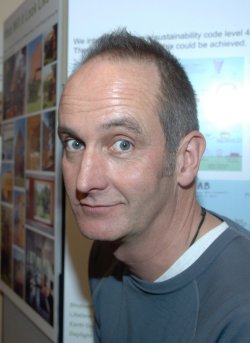
In idle moments, I have wondered how Kevin McCloud from Grand Designs manages not to age.

kevinmccloud250

Kevin McCloud, aged 97
(photo credit: http://www.swindonweb.com)

His bald patch seems to have miraculously maintained the same circumference, and years of raising eyebrows at crackpot projects appear to have had a negligible effect on his forehead.

I realised the other night how he does it. By appearing in repeats.

M used to love Grand Designs, hence why I have studiously avoided it since He died. However, my daughter and I ended up watching it while we waited for The Apprentice to come on. (Go, sultry doctor, go!)

Again I marvelled at McCloud’s age-dodging prowess, until the date of the project was revealed. May 2006.

It was the year M and I married. May would have been around the time I was ready to combust with the pressure of choosing napkins for the tables.

It struck me how much has changed in the seven short years since Tim from Cirencester started his Grand Design, and M and I said ‘I do’. How little was foreseen of life in its current form.

In that time, I gave birth. We moved house four times. M fell ill. I became frightened of the world. M died. I faced off the world. I bought a house and a dog. I started a PhD.

And unlike Kevin, I aged. Not only physically, but mentally. I became well-versed in the workings of the blood pressure monitor, in Warfarin and in cardiac rehabilitation. Then I had to watch Him die, and face the reality of a life without Him. As a single, widowed parent.

Can I hit the stop button and appear in a repeat too?

Northern Exposure

Sisyphus

Sisyphus (Photo credit: Wikipedia)

Despite the bawdiness and the bravado, I am, today, wondering how I’m going to get through this.

Like Sisyphus, I’m pushing my boulder of grief up the mountainside only for it to come crashing down once it nears the top.

Insomnia has set in again, not through lack of alcohol, but because of the heat. It has reached the woozy heights of 19 degrees in the village, and both my daughter and I are still rolling about the bed at midnight trying to find the cool patch. Insomnia allows Bad Thoughts to roam free, and also draws attention to the wardrobe, at the bottom of which is the casket containing…well, Him.

Sunny days are, in themselves, catalysts for sadness – they make everywhere look full of hope, even grey-rendered, pebble-dashed Northern villages such as this one. But part of me doesn’t want hope to blossom (the stubborn, self-pitying, foot-stamping toddler part), because M has been denied it.

My counsellor is starting a round of Exposure Therapy next week. This does not involve us flashing our bits at each other across a crowded room; rather, we will be breaking down the traumatic event (Husband, intercourse, “socks!”, pillow, dead), recording it like chapters in a book, then ‘exposing’ ourselves to it and the onslaught of emotions it elicits. By deconstructing the trauma, its power to destabilise is weakened, therefore I can allow myself to think about it occasionally without hyperventilating.

It sounds like psycho-babble, but I’m trying to be hopeful.

The Prophecy of the Bald Surgeon

Agadoo

Agadoo (Photo credit: Wikipedia)

There was a crash outside our village this weekend. Ambulances, police cars, rubber-neckers, the lot.

My heart sank at the prospect of fatalities. Which poor sod would get the policeman at their door telling them that their loved one was dead?

Whilst no less devastating, losing your spouse suddenly is a different experience to watching them succumb to a long illness.

You have no time to prepare, to say goodbye, for them to make any last minute confessions or request Agadoo be played at the funeral.

Equally, you don’t face the agony of the slow diminishment of the person you love, of steering them through the realities of imminent death and the fact that they will never see their kids grow up.

In a sense, with M, we went through both of these scenarios.

He fell ill, suddenly and catastrophically, in 2008. He was wheeled into emergency open-heart surgery, not knowing whether He would see daylight again.

But He survived, and the prognosis was good. A ‘normal lifespan’ was to be expected, according to the Bald Surgeon in the Blue Scrubs. (How I came to fear the Bald Surgeon in the Blue Scrubs  – he and his team of wingmen would come sweeping onto the ward and announce yet further obstacles to M’s recovery – collapsed lung, mild mid-brain stroke – but despite it all, we were discharged with the belief that a ‘normal lifespan’ was to be expected.)

I had watched my beloved suffer though; I had seen the fear in His eyes. His rehabilitation was gruelling, but His determination to live somehow over-rode every setback.

It seemed like God’s final insult, therefore, to have finished Him off in the way He did. Unceremoniously, with no regard for how far we had come.

So much for God and Bald Surgeons.

Lady in Waiting

883278_10151322318116657_970659820_o

My dog, waiting.

If only all men were as pleased to see me as my dog.

I came home earlier and there he was. In the window. With his waggly tail. And one of my daughter’s toys in his mouth, disembowelled and relieved of all its facial features.

Whenever I leave him, he takes his place on the back of the settee and stares out, waiting for the moment when I reappear. Sometimes I’ve only gone to the car and back, yet he greets me as if I’m Lord Lucan.

He spends his entire life waiting, actually. He’s sitting under my desk now as I type, waiting for a biscuit. He waits for walks, food, bed-time, up-time. In the year that I’ve had him, he has become utterly devoted to me and my every move.

In the first few months after M’s death, I spent much of my time waiting too. Like my dog in the window, I stared out, waiting for Him to return. Time marched on but still I waited. I wasn’t entirely sure what I was waiting for, as logic dictated that He wasn’t coming back. He hadn’t just nipped to the car. But still, I waited.

I realised today, when I returned home and saw the dog at the window, that I am no longer waiting.

I’m not sure when I stopped waiting. I still hold on to a brittle hope that somehow He’ll come walking round a corner – indeed, I fantasise about it: that He’ll materialise out of a crowd of shoppers, or step out of the woods while I’m on a walk.

But the waiting has ended. He’s not coming back.

On homesickness

Nostalgia's not what it used to be

Nostalgia’s not what it used to be (Photo credit: marc e marc)

In one of those weird moments of simultaneity, after I wrote yesterday’s post about homesickness, I opened my bedtime reading to find William Fiennes talking about the same thing. (Although he made no reference to projectile piss at a Madness concert.)

Fiennes describes how the condition was given a medical designation as far back as 1688, by a Swiss physician named Hofer. He called it ‘Nostalgia’, and described it as a ‘serious disease’ characterised by the following symptoms:

‘…continued sadness, disturbed sleep either wakeful or continuous, decrease of strength, hunger, thirst, senses diminished, and cares or even palpitations of the heart, frequent sighs, also stupidity of the mind – attending to nothing hardly, other than an idea of the Fatherland.’

The idea was picked up again in 1754 by a fella called De Meyserey, who observed ‘nostalgia’ in a military context. He emphasised the importance of ‘keeping any soldier who showed signs of homesickness busy, diverted, occupied by tasks or vigorous activity. He recommended medications that would allow the blood and humours to circulate more easily…’

Anyone who has experienced grief will recognise the symptoms, and the prescription for its ‘relief’. Diversions, medications. Anything to help contain the spread of the ‘disease’.

The passage in Fiennes’ book (The Snow Geese) helped elucidate my feelings of ‘homesickness’ within the context of my grief.

For grief is a ‘sickness’ in itself, impacting on every aspect of my new life. And as far as I can see, there is no cure other than to keep going.